Evropska komisija je v sredo, 7. 1., v Uradnem listu Evropske unije objavila uredbo o registraciji Kranjske klobase, ki je že 22.
Zaščita Kranjske klobase kot slovenskega proizvoda, je za Slovenijo izjemen uspeh.
Pobudo za zaščito kranjske klobase z geografsko označbo je na Ministrstvo za kmetijstvo, gozdarstvo in prehrano vložil GIZ kranjska klobasa.
Zaščita proizvoda z geografsko označbo pomeni, da mora vsaj eden od proizvodnih postopkov potekati znotraj določenega geografskega območja, medtem ko surovina za proizvodnjo lahko prihaja izven tega geografskega območja.
Kranjska klobasa prav gotovo sodi med najizvirnejše in najbolj priljubljene slovenske mesne izdelke.
The Kranjska sausage is one of the most internationally recognisable Slovenian specialties.
Unique Slovenia is famous for numerous culinary specialties.
This popular Slovenian sausage has been listed among the protected agricultural products in the European Union.
The protection is proof of quality and reputation related to the geographical origin.
By making it on to the list of protected agricultural products in the European Union, the Kranjska sausage joined the group of Slovenian dishes that already had the prestigious label of protected geographical indication.
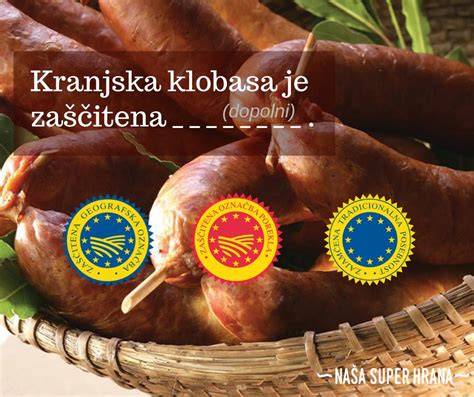
Kranjska sausage has been produced in Slovenia since the beginning of the 19th century.
It originates from the Gorenjska region, from where its popularity spread throughout the entire country.
It used to be on the menus of dinners at celebrations and important events and was known all the way to Vienna.
Its fame is seen in an interesting anecdote about the Emperor Franz Joseph I of Austria and their first encounter in Naklo near Kranju.
An innkeeper is said to have served the emperor with the only food he could offer, a simple homemade sausage.
The emperor tried it and was delighted with its taste, naming the sausage kranjska klobasa.
The Carniolan sausage originates from the times of the Austro-Hungarian monarchy and it was named after the province of Carniola which was, from the 15th century on, the central province in the territory of Slovenia and the only completely Slovenian region.
The earliest mention of Carniolian sausage in German is found in Katarina Prato's renowned cookbook Süddeutsche Küche (South German Cooking, 1896), describing the manner of cooking the sausage.
The oldest recipe for preparation of Carniolian sausage was published in 1912 in the sixth edition of “Slovenska kuharica” (“Slovene Cookbook)” by Felicita Kalinšek.
Chroniclers of old Ljubljana mention the Carniolan as a part of menus at important and gala events.
Emigrating Slovenians took the sausage with them out into the world, making it famous worldwide.
Registracija, zaščita in postopek na ravni EU
Since the end of 2014, Kranjska sausage has been protected with geographical indication by the European Union, additionally confirming the international recognisability of the product and the popularity of this Slovenian specialty.
To je že 22. Za Slovenijo je to 11. zaščitena geografska označba na ravni EU.
Na kmetijskem ministrstvu ocenjujejo, da je zaščita kranjske klobase kot slovenskega proizvoda za Slovenijo izjemen uspeh.
Ministrstvo je marca 2009 vlogo za zaščito kranjske klobase posredovalo v presojo Evropski komisiji za registracijo na ravni EU.
Komisija je menila, da je utemeljitev ustrezna, in je februarja 2012 v uradnem listu EU objavila povzetek vloge za kranjsko klobaso.
V skladu z evropsko zakonodajo so lahko v roku šestih mesecev od dneva objave ostale države članice in tretje države utemeljeno ugovarjale na objavljeno vlogo.
Prehodna obdobja in pogoje zanje določa že evropska zakonodaja s področja zaščit kmetijskih proizvodov in živil, zato niso vsebina pogajanj med državami.
Hrvaška imena kranjska klobasa ne sme uporabljati, ime “kranjska kobasica” pa torej lahko uporablja največ 15 let, pri čemer mora biti na proizvodih jasno navedena država porekla, to je Hrvaška.
The European Agricultural Fund for Rural Development. Europe invests in the countryside.
The project is co-financed by the EU.
| Podatek | Vsebina |
|---|---|
| Objava uredbe | sreda, 7. 1. |
| Število zaščitene označbe za Slovenijo | 11. |
| Skupno število registracij | 22. |
| Število slovenskih proizvajalcev | 13 |
| Prehodno obdobje za ime “kranjska kobasica” | največ 15 let |
Proizvodnja, sestava in videz
The Carniolan sausage (Kranjska klobasa) represents a Slovene culinary specialty that can be produced by no more than 13 Slovene producers that have obtained a certificate for its production.
As a traditional food product it is protected by geographical indication in the country of origin and represents a symbol of cultural heritage that Slovenes are justifiably proud of.
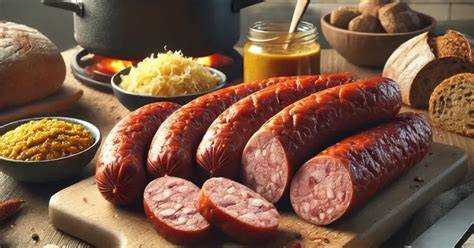
Made using the finest pork and bacon with added sodium nitrite and seasoned solely with garlic and pepper, the Carniolan sausage is held together with a wooden skewer.
The sausage is a reddish brown colour on the surface and bears a faint scent of smoke; in cross-section, the meat is pinkish red, while the bacon is a creamy white colour and not dissolved.
Kranjska klobasa je poltrajna mesna klobasa iz nasoljenega grobo zmletega svinjskega mesa in čvrste hrbtne slanine, dopolnjena z aromo česna, popra in dima.
All producers use a uniform logo and the national geographical designation for labelling the Carniolan sausage.
To find out more about the certified producers of the protected Carniolan sausage, visit section Proizvajalci.
Okus, uporaba in kulinarični pomen
You can enjoy Kranjska sausage with sour cabbage or sour turnip and freshly grated horseradish.
Let yourself be convinced about its quality and unique taste at the Kranjska sausage festival, which takes place every August in Sora near Medvode.
A competition and evaluation of individual types of Kranjska sausage is followed by an award for the best one.
Taste Slovenia!
Druge zaščitene slovenske dobrote
From these protected specialties, you can try a slice of prleška tünka (minced lard and pork), zgornjesavinjski or šebreljski želodec (a type of salami).
Unique pršut (prosciutto), zašink (cured pork neck) and panceta (pancetta) are produced in the Karst.
Take a bite of ptujski lük, juicy and aromatic onion from the Ptuj field, which is excellently supplemented by štajersko and prekmursko bučno olje (Styrian-Prekmurje pumpkin-seed oil).
The famous idrijski žlikrofi (Idrija potato-filled dumplings) and the rich prekmurska gibanica (Prekmurje layer cake) with poppy seeds, cottage cheese, walnuts and apples have a guaranteed traditional quality.
Cheese lovers should try a slice of Nanos cheese, Bovec cheese, Tolminc cheese, Kras sheep’s milk cheese or the slightly piquant Mohant cheese from Bohinj.
Meanwhile, the protected extra virgin olive oil of Slovenian Istria and Piran salt from the Sečovlje salt pans bring the taste of the Mediterranean.